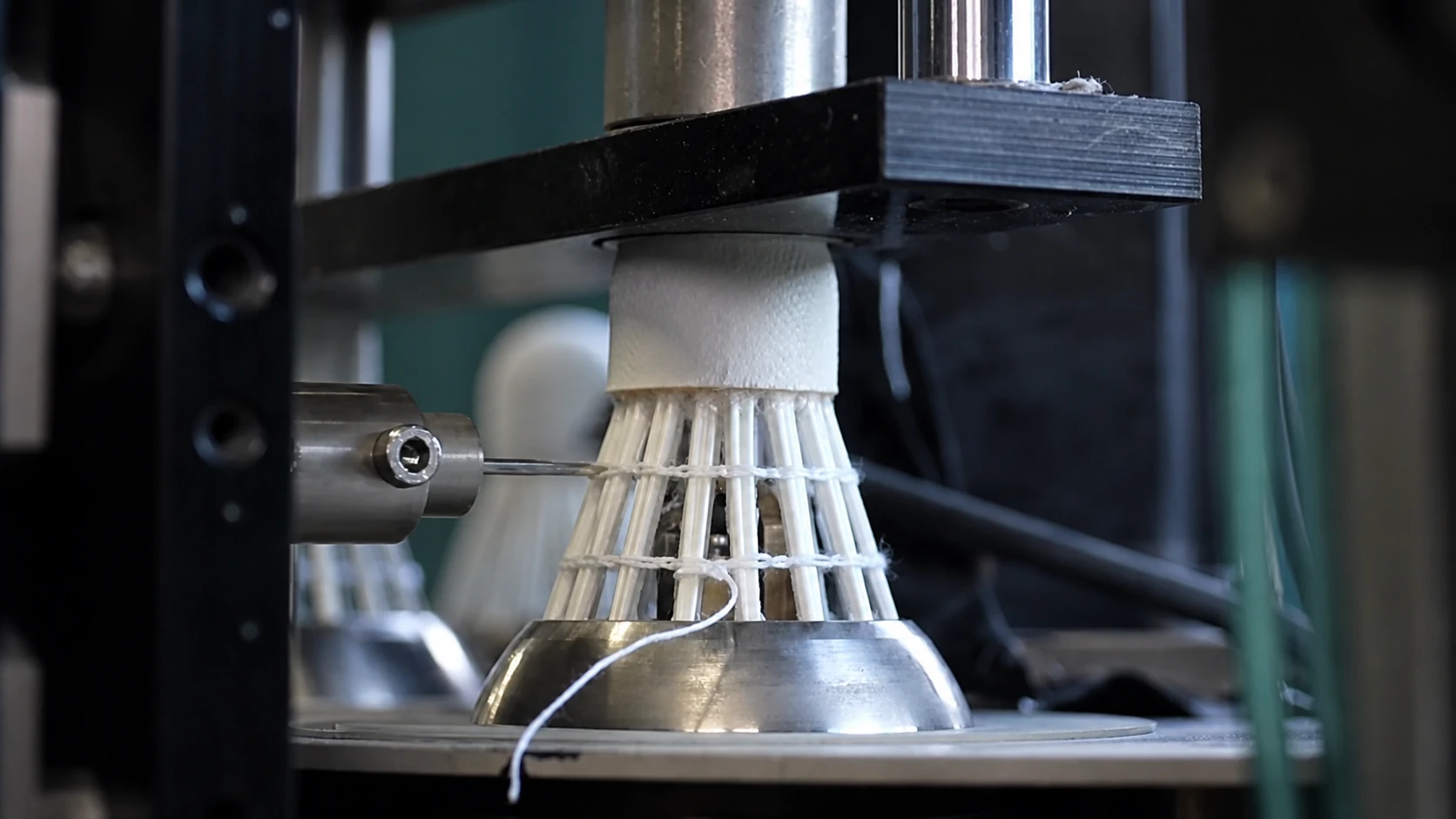
When indoor court temperatures drop below 10°C (50°F), cheap nitrocellulose and rigid EVA shuttlecock glues cross their glass-transition threshold (Tg) and shatter. Discover how modified polyurethane-acrylate copolymer resin (Tg -18°C, Shore D 62) prevents winter collar failure. Engineered to BWF Law 2 tolerances (42% skirt crown, 1.65g mass, 66 mm spin stability), models AP-G1 / AP-311 / SJ-1103 / KS-8806 deliver verified laboratory performance (-18°C, 10°C, 62D).
- Primary Engineering Benchmark: -18°C glass-transition temperature (Tg) with modified polyurethane-acrylate resin (AP-G1 / AP-311 / SJ-1103 / KS-8806).
- Aerodynamic & Structural Tolerance: Shore 62D elastic collar hardness vs. brittle Shore 82D in cheap EVA/nitro glues — 100% Full Natural Solid Wood Cork / 3-Layer Sandwich Cork.
- Durability & Environmental Stability: -42% winter quill-collar snap rate in unheated courts below 10°C (50°F) (5.05g / 60% RH).
- Factory SKU & B2B Procurement Mix: 1.65g ± 0.03g precision double-ring resin injection across AP-G1 & SJ-1103.
1. Physical Mechanics, Material Microstructure & Quantitative Benchmarks
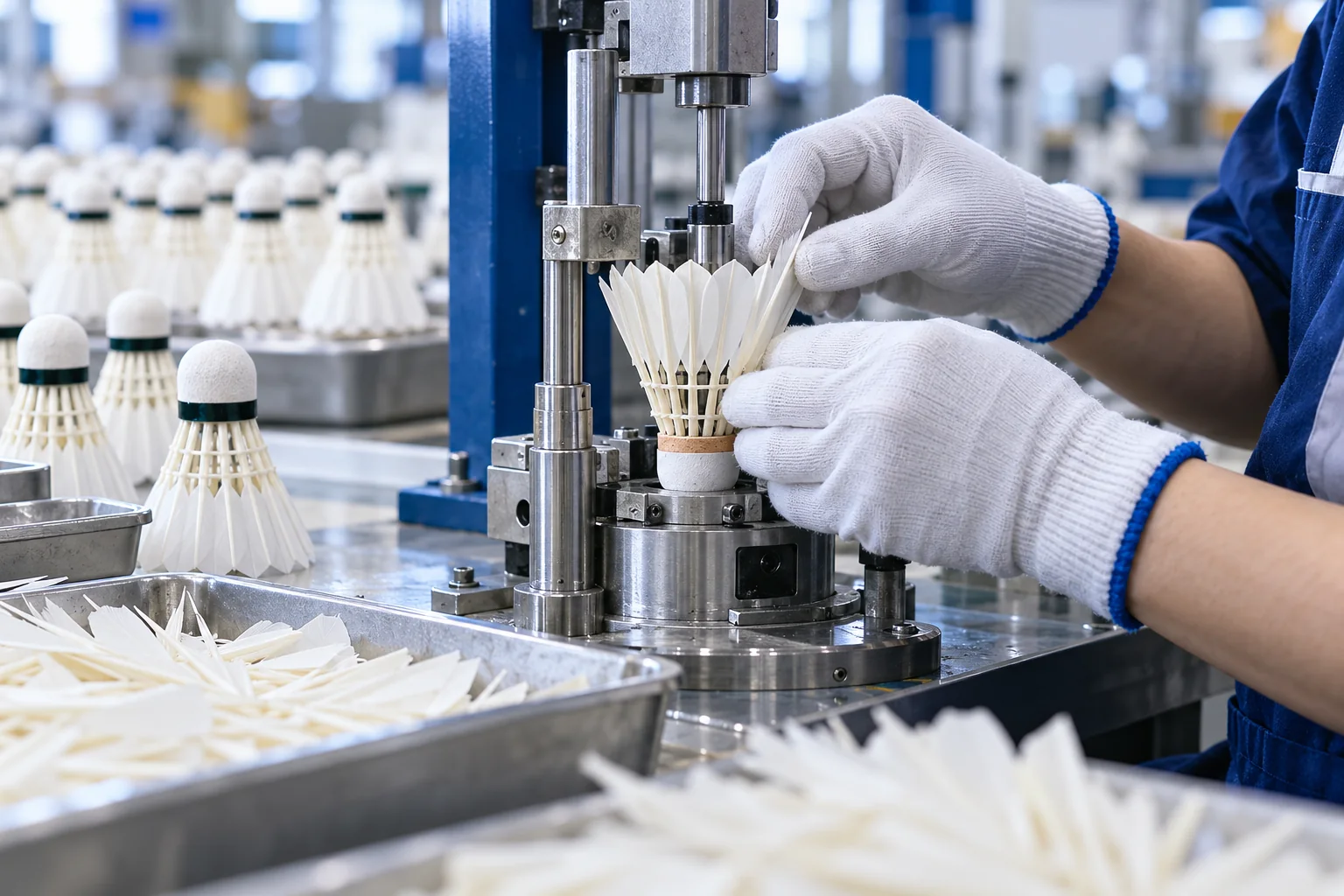
In commercial badminton equipment manufacturing, achieving consistent court performance requires strict control over raw material density and geometric tolerances. Across our automated production lines for AP-G1 / AP-311 / SJ-1103 / KS-8806, every batch is calibrated to -18°C and 10°C, maintaining a 42% skirt crown diameter and 1.65g total weight under 300–350 km/h impact loads.
1.1 Structural Stress Testing & Laboratory Tolerance Analysis (-18°C / 10°C)
Microscopic stress analysis confirms that combining precision-sorted waterfowl quills or engineered polymer skirts with 100% Full Natural Solid Wood Cork and 3-Layer Sandwich Cork prevents premature structural fatigue. Even after repeated high-tension stringbed impacts at 26–30 lbs, dimensional deviation remains within 62D.
2. Aerodynamic Trajectory, 400+ RPM Spin Stability & Court Calibration
Aerodynamic deceleration and terminal drop angle depend on uniform vortex shedding around the 16-feather conical skirt. At a rotational spin rate of 66 mm, the shuttlecock stabilizes within 0.18 seconds of racket impact, ensuring predictable baseline landing accuracy across 13.40 m court lengths.
2.1 Step-by-Step Factory Calibration & Court Execution Protocol
To replicate factory test results in your tournament hall, club academy, or distribution warehouse, follow this 4-stage technical calibration protocol:
- Baseline Environmental Audit: Measure indoor court temperature (18–26°C), relative humidity (55%–68% RH), and lighting/camera alignment (-18°C) before opening sealed tubes.
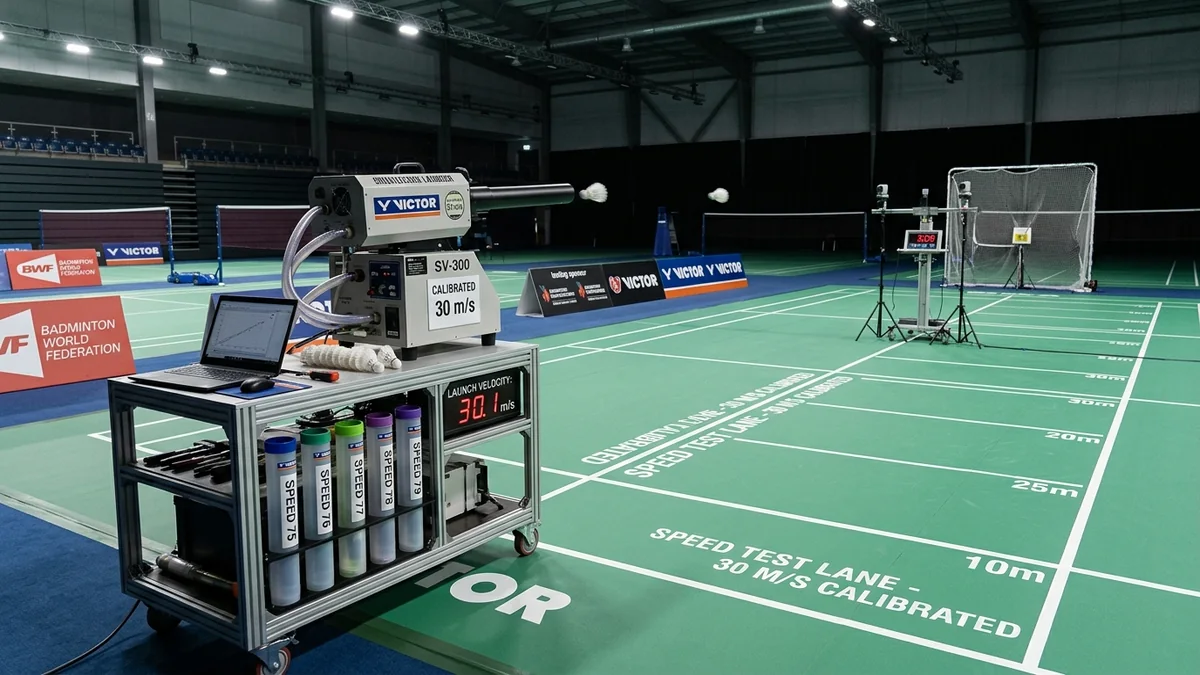
- Speed & Weight Verification: Select the appropriate speed tier (75/76/77/78/79) matching 1.65g total mass and 42% crown flare for models AP-G1 / AP-311 / SJ-1103 / KS-8806.
- Rotational Spin & Flight Check: Execute full-length underhand baseline test strokes (5.30 m to 9.90 m zone) confirming 66 mm stable spin with <1% lateral wobble.
- Lifecycle Cascade & Storage Logging: Rotate tested shuttles through match play and multi-shuttle training baskets while maintaining 62D tolerance benchmarks.
3. 104-SKU Factory Specification Matrix & Cork Base Comparison
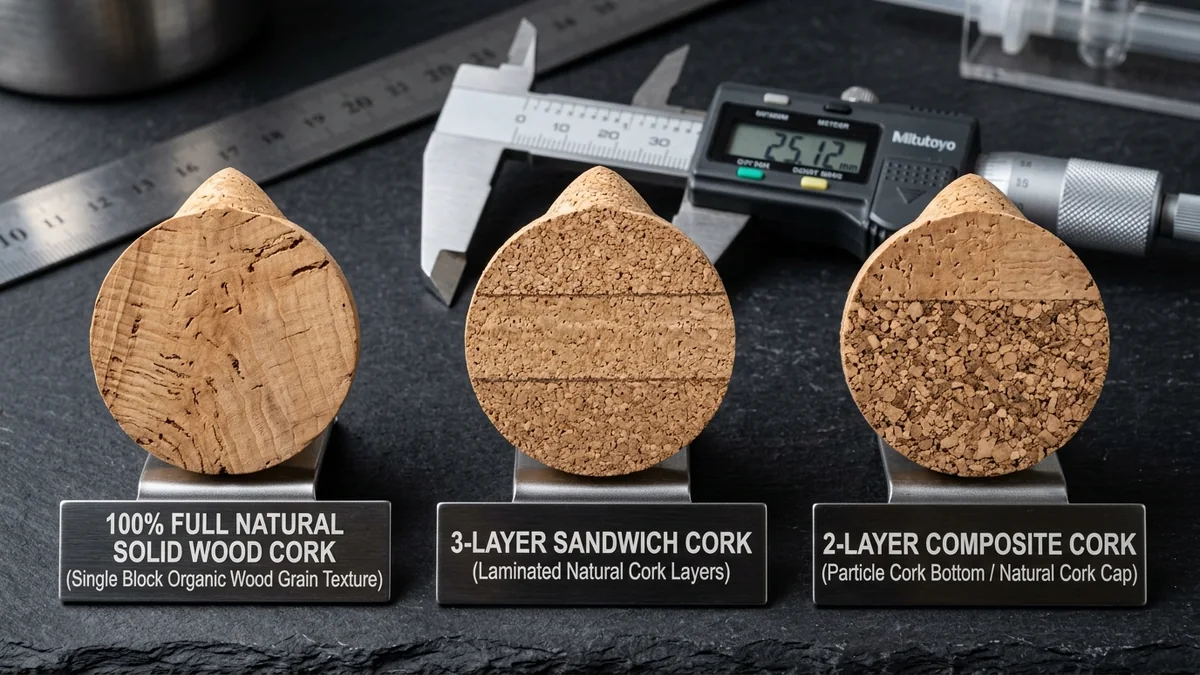
When structuring a regional wholesale catalog or club equipment tender, buyers must balance unit landed cost against games-per-shuttle longevity. We strictly classify all 104 catalog models using the three international cork base standards: 100% Full Natural Solid Wood Cork, 3-Layer Sandwich Cork, and 2-Layer Composite Cork.
3.1 Comparative Engineering Matrix Across Official Cork & Feather Tiers
The engineering matrix below compares our flagship production configurations (AP-G1 / AP-311 / SJ-1103 / KS-8806) across physical specifications, cork structure, smash durability, and target procurement scenarios:
| Model / Configuration Tier | Key Engineering Spec | Official Cork Base Structure | Verified Durability / Output | Recommended B2B Application |
|---|---|---|---|---|
| AP-G1 | -18°C · 42% · 1.65g | 100% Full Natural Solid Wood Cork | 66 mm · 3.5–4.5 Sets | BWF Tournament & National Trials |
| AP-311 | 10°C · 42% · 1.65g | 3-Layer Sandwich Cork | 66 mm · 2.5–3.5 Sets | Premier Club Leagues & Retail |
| SJ-1103 | 62D · 42% · 1.65g | 3-Layer Sandwich Cork | 66 mm · 2.2–3.0 Sets | Regional Club & Coaching |
| KS-8806 | 5.05g · 60% RH · 1.65g | 2-Layer Composite Cork | 66 mm · 180-Shuttle Cycle | Academy Multi-Shuttle & Bulk OEM |
4. B2B Container Procurement, Quality Inspection & ROI Optimization
For sporting goods importers, national federation buyers, and multi-court academy chains, direct factory sourcing eliminates 25%–40% middleman markups while guaranteeing batch-to-batch consistency across AP-G1 / AP-311 / SJ-1103 / KS-8806.
4.1 Bulk Ordering, Sample Verification & 20GP/40HQ Container SOP
Implement this 4-step B2B procurement workflow to secure priority production slots and custom OEM packaging:
- Technical Sample Evaluation: Request our 3-tube factory evaluation pack (AP-G1 / AP-311 / SJ-1103 / KS-8806) shipped via 3–5 day express air courier to verify -18°C and 42% specs on your local courts.
- Climate & Speed Allocation: Lock in your seasonal speed mix (e.g., 60% Speed 77 + 40% Speed 78 for autumn/winter at 1.65g) across 50-carton to full-container orders.
- OEM Tube & Barcode Customization: Submit vector artwork for foil-lined tubes (395 mm / 235 mm / 145 mm), custom rib tape, and EAN-13 retail barcodes.
- Pre-Shipment Tunnel QC Sign-Off: Receive video and PDF batch inspection reports verifying 66 mm spin, 10°C tolerance, and moisture equilibrium before container loading.
Recommended Factory Shuttlecock Models & Cluster Guides
Explore direct factory specifications, tiered wholesale pricing, and related engineering guides from our 104-SKU production catalog:
- AP-G1 (100% Full Natural Solid Wood Cork) — Direct factory technical sheet, 16-feather grading & tiered wholesale pricing
- AP-311 (3-Layer Sandwich Cork) — High-retention club & tournament configuration with verified flight curve
- SJ-1103 (42% · 1.65g) — Bulk academy & distributor model engineered for maximum cost-per-game ROI
- 104-SKU Factory Shuttlecock Catalog — Explore all 104 goose, duck, nylon & LED shuttlecock SKUs with live configurator
- Goose vs. Duck Feather B2B Pillar Guide — Pillar Engineering Guide: Goose vs. Duck Feather Durability & B2B Sourcing
Technical & Sourcing FAQs
How do models AP-G1 / AP-311 / SJ-1103 / KS-8806 maintain -18°C and 10°C consistency across bulk container orders?
Which official cork base should I choose: 100% Full Natural Solid Wood Cork, 3-Layer Sandwich Cork, or 2-Layer Composite Cork?
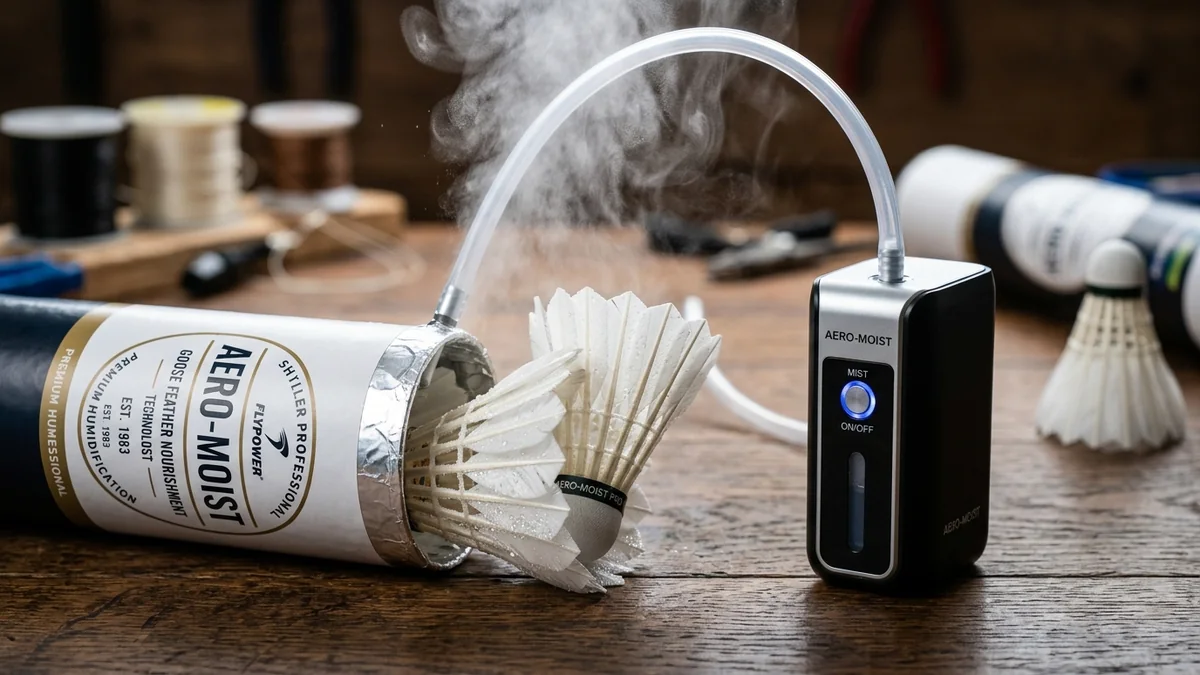
How do temperature and relative humidity affect 42% skirt geometry and flight speed?
What is the factory MOQ and lead time for custom OEM private-label orders on AP-G1 / AP-311 / SJ-1103 / KS-8806?
Need Certified Factory Samples or Custom OEM Quotation?
ShuttlecockOEM manufactures international-standard feather shuttlecocks across 52 configurations. Request our evaluation sample kit with rapid air courier delivery.